Folio Classic
folio-classic-v1
Default
Warm parchment canvas, cinnabar accent. The system's own voice.
23 palette entries · 42 roles
Folio helps agents turn raw notes into stable PDF, PPTX, SVG artifacts, and Web design guidance. Use this page to choose an output path, inspect specimens, and follow the rules for extension.
00 · Master Index
Choose what Folio should produce. The catalog maps user requests to PDF, PPTX, SVG or Web reading pages, and the specimen matrix shows the actual output language.
Document Classes
Each class resolves a natural-language request into a stable output path with a predictable format.
| No. | Type | Function | Format |
|---|---|---|---|
| 01 | One-Pager | Launch brief, proposal, executive summary | |
| 02 | Long Doc | White paper, review, technical report | |
| 03 | Letter | Formal note, statement, governance memo | |
| 04 | Portfolio | Selected works and editorial case studies | |
| 05 | Resume | Professional profile and measurable career record | |
| 06 | Slides | Talk deck, keynote, internal presentation | PPTX |
| 07 | Equity Report | Investment memo and earnings brief | |
| 08 | Changelog | Release notes and version narrative | |
| 09 | Artifact Records | Architecture and UML diagram specimens | SVG · PNG · PDF |
| 10 | Web Reading Pages | Static reading pages set by the engine's Web profile | HTML |
01 · Manifesto
Folio treats a document not as neutral output, but as the form through which thought becomes public, readable, and durable. Warm parchment slows the page down, serif gives judgment a voice, cinnabar marks what matters, and whitespace protects the reader's attention. The goal is not decorative polish. It is to give content order, emphasis, and enough weight to be worth keeping.
The page should feel held, not backlit: use parchment #F6F0EA, never pure white
Accent is judgment, not decoration: use cinnabar-coral #B83D2E only, never a second chromatic hue
Neutrals must stay warm so the document feels archival, never cold or blue-gray
One serif family should carry the page so headlines and body speak in a single editorial voice
Authority comes from hierarchy, not force: body at 400, headings at 500, no synthetic bold
Reading needs tempo: keep the three line-height bands for titles, dense blocks, and long reading
Spacing should respect language: Chinese print body usually carries 0.3pt tracking, English body stays at 0
Tags must stay materially clean: solid hex only, never rgba, to avoid the WeasyPrint double-rectangle artifact
Depth should whisper, not perform: use ring or whisper shadows, never hard drop shadows
No italic in templates or demos; emphasis should come from structure, contrast, and placement
02 · Usage
Tell Claude what you need, for example "build me a resume", "make a one-pager for my startup", "write an equity report", or "format these release notes". The skill auto-triggers, no slash command needed.
# Claude Code
# Publish this repository under your own namespace first.

# Codex
bash scripts/package-skill.sh   # build dist/folio.zip, then install locally
Claude Desktop: build dist/folio.zip with scripts/package-skill.sh, then upload it in Customize > Skills > "+" > Create skill.
03 · Color
One accent + warm neutrals + zero cool colors. Cinnabar-coral covers no more than 5% of any page. Beyond that is clutter, not restraint.
Parchment
Page background, the emotional foundation
#F6F0EAIvory
Cards / elevated surfaces
#FBF7F3Warm Sand
Button default / interactive surfaces
#E6DACDDeep Dark
Dark theme page base, brown-charcoal instead of pure black
#191514Cinnabar Coral
Primary color · CTA · quote bar · section overline
#B83D2ECoral Light
Links on dark surfaces · lighter variant
#D06A5EDark Surface
Dark theme container · warm charcoal
#2E2521Error
Error state, deep warm red
#A63A31Near Black
#191514Dark Warm
#3A312DOlive
#5A4A43Stone
#756A63Solid hex equivalents of cinnabar-coral #B83D2E on parchment. Tags use solid hex instead of rgba() to avoid a WeasyPrint double-rectangle rendering bug.
0.08
#F7E6E10.14
#F1D2CC0.18
#F1D2CC0.22
#EBC7C00.30
#E2B3A8Three schemes ship, one file each in references/profiles/theme/. FOLIO_THEME selects one, and it reaches documents, diagrams, slide decks and these pages. Every scheme is held to the same bar: text at 4.5:1 on both surfaces, a hairline that stays visible, and ramp numbers that follow lightness.
Folio Classic
folio-classic-v1
Default
Warm parchment canvas, cinnabar accent. The system's own voice.
23 palette entries · 42 roles
Folio Forest
folio-forest-v1
Warm bone canvas, deep forest accent. Editorial and long-form.
18 palette entries · 42 roles
Folio Slate
folio-slate-v1
Cool neutral canvas, deep azure accent. Institutional research.
18 palette entries · 42 roles
FOLIO_THEME=folio-slate-v1 python3 scripts/build.py renders in a scheme; python3 scripts/check_theme_schemes.py holds every scheme to the bar. Unset, the profile marked default is used.
04 · Typography
Serif carries hierarchy, sans carries function. Serif body at 400, headings at 500.
Aa
Serif · Headlines + Body
Charter / LXGW WenKai
Used for headlines, body text, pull quotes, and numeric emphasis. English uses Charter, Chinese uses LXGW WenKai.
</>
Mono · Code
JetBrains Mono
Code blocks, version numbers, hex values, tabular figures.
05 · Spacing & Shape
Base unit: 4pt. Denser layouts get smaller margins; more formal documents get larger ones.
| Scale | Value | Use | |
|---|---|---|---|
| xs | 2-3 pt | Inline elements | |
| sm | 4-5 pt | Tag padding · tight layout | |
| md | 8-10 pt | Component internals | |
| lg | 16-20 pt | Between components · card padding | |
| xl | 24-32 pt | Section title margins | |
| 2xl | 40-60 pt | Between major sections | |
| 3xl | 80-120 pt | Between long-doc chapters |
Folio avoids traditional hard shadows. Depth comes from ring shadows, whisper shadows, and light-dark alternation.
Ring Shadow
0 0 0 1pt var(--color-border-default)
Buttons · focus rings
Whisper Shadow
0 4pt 24pt rgba(0,0,0,0.05)
Gentle elevation · feature cards
Light ⇌ Dark
parchment ⇌ deep-dark
Section-level · strongest contrast
06 · Components
Document atoms for PDF and artifact composition. This section is reference material, not a Web component gallery.
ring state · active press 1px · 8pt radius
solid hex · pick from weak to strong
left 2pt brand solid + olive text
A thousand no's for every yes, prefer clarity over decoration.
serif number + sans label · tabular-nums
serif 500 · 15pt · size-led hierarchy with optional brand left bar
dash instead of bullet · editorial tone
ivory bg + 0.5pt border + 6pt radius
// warmth from restraint, not from color
canvas   = parchment; accent = cinnabar_coral
palette  = warm_neutrals − cool_grays
document = serif × hierarchy + generous_space
beauty   = constraints × intention ÷ noise
quiet artifact surface + 16pt radius
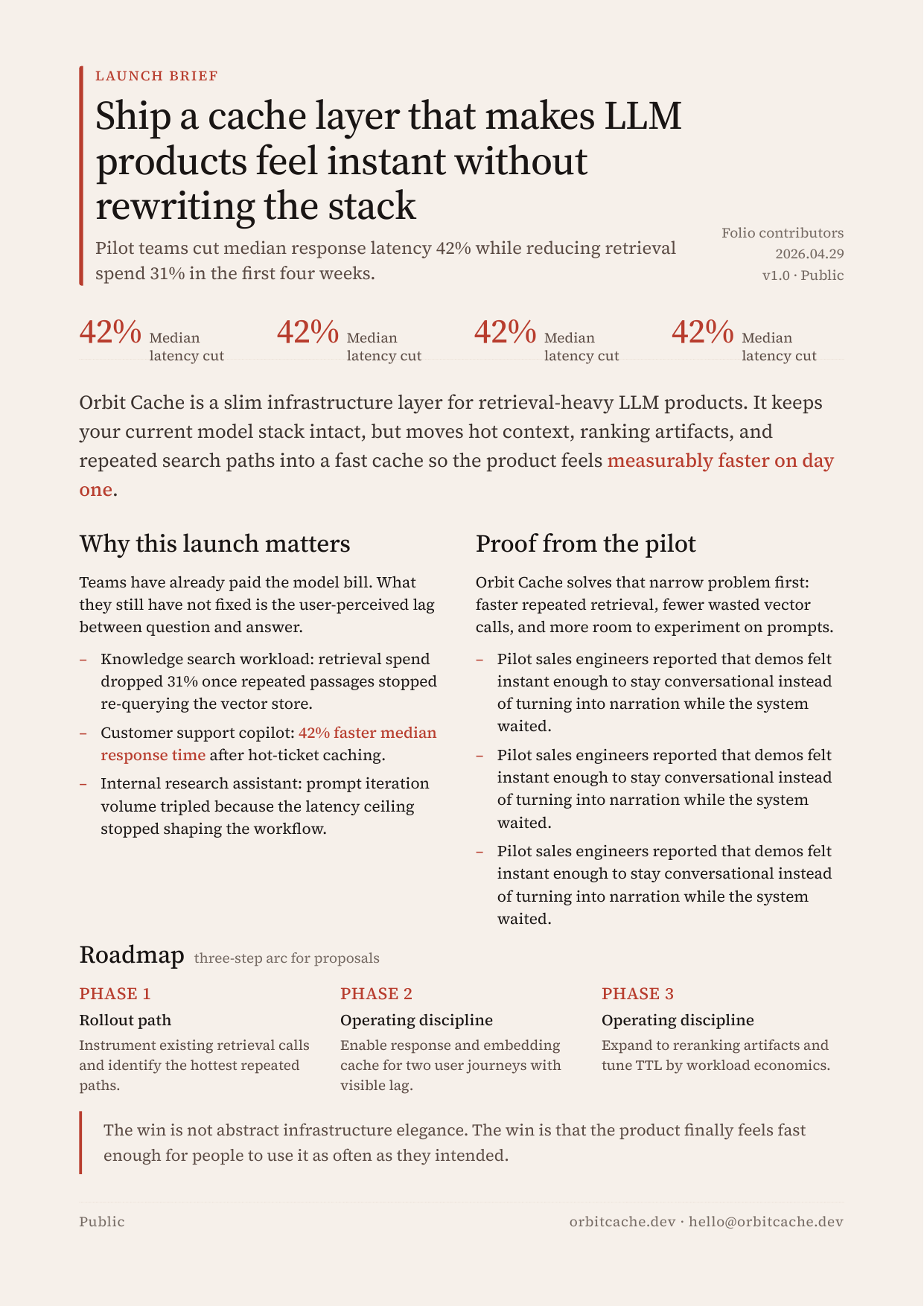
Tesla Company Profile · One-Pager
Single A4 page · 4 metric cards + 3 body sections + timeline
07 · Diagrams
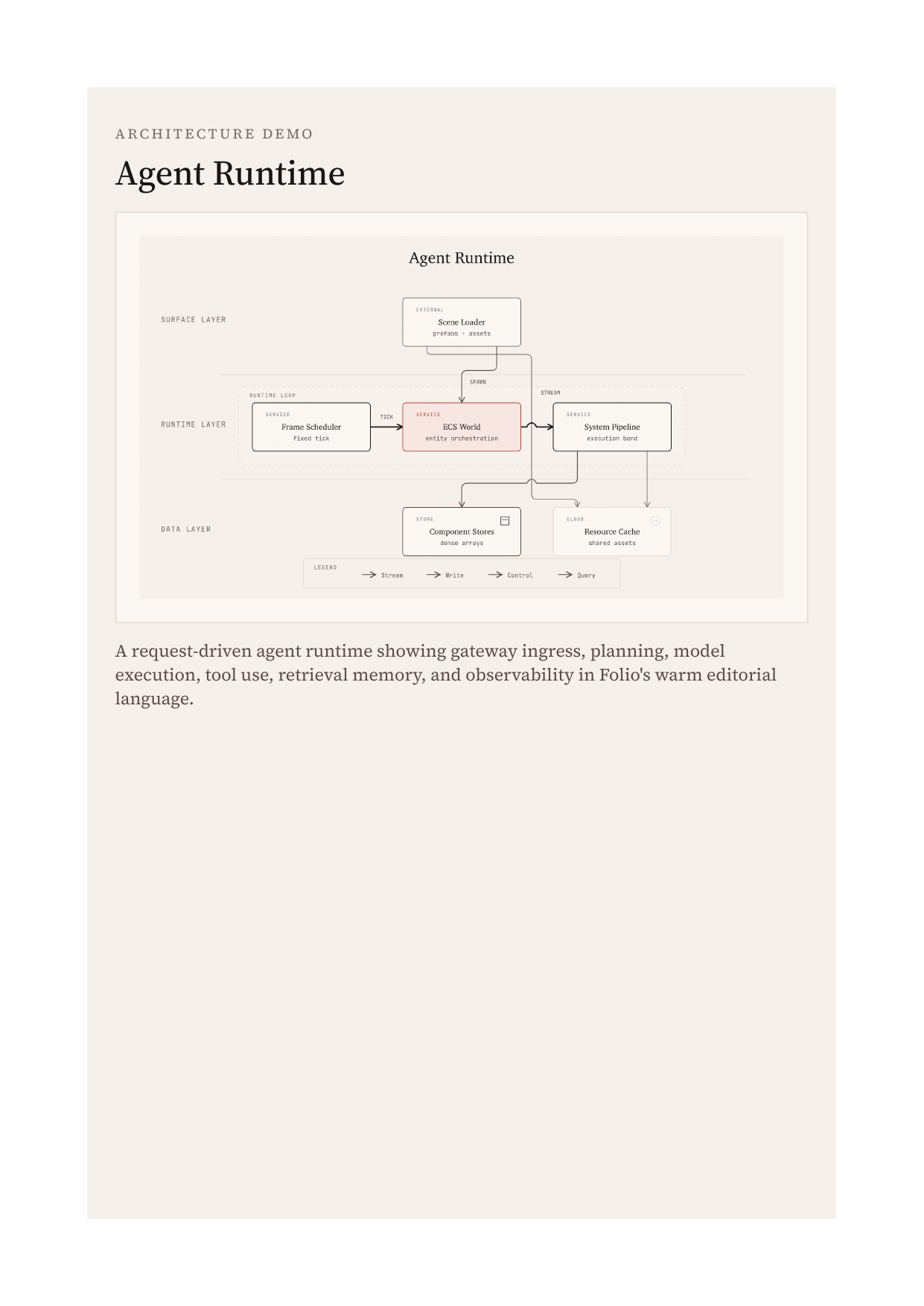
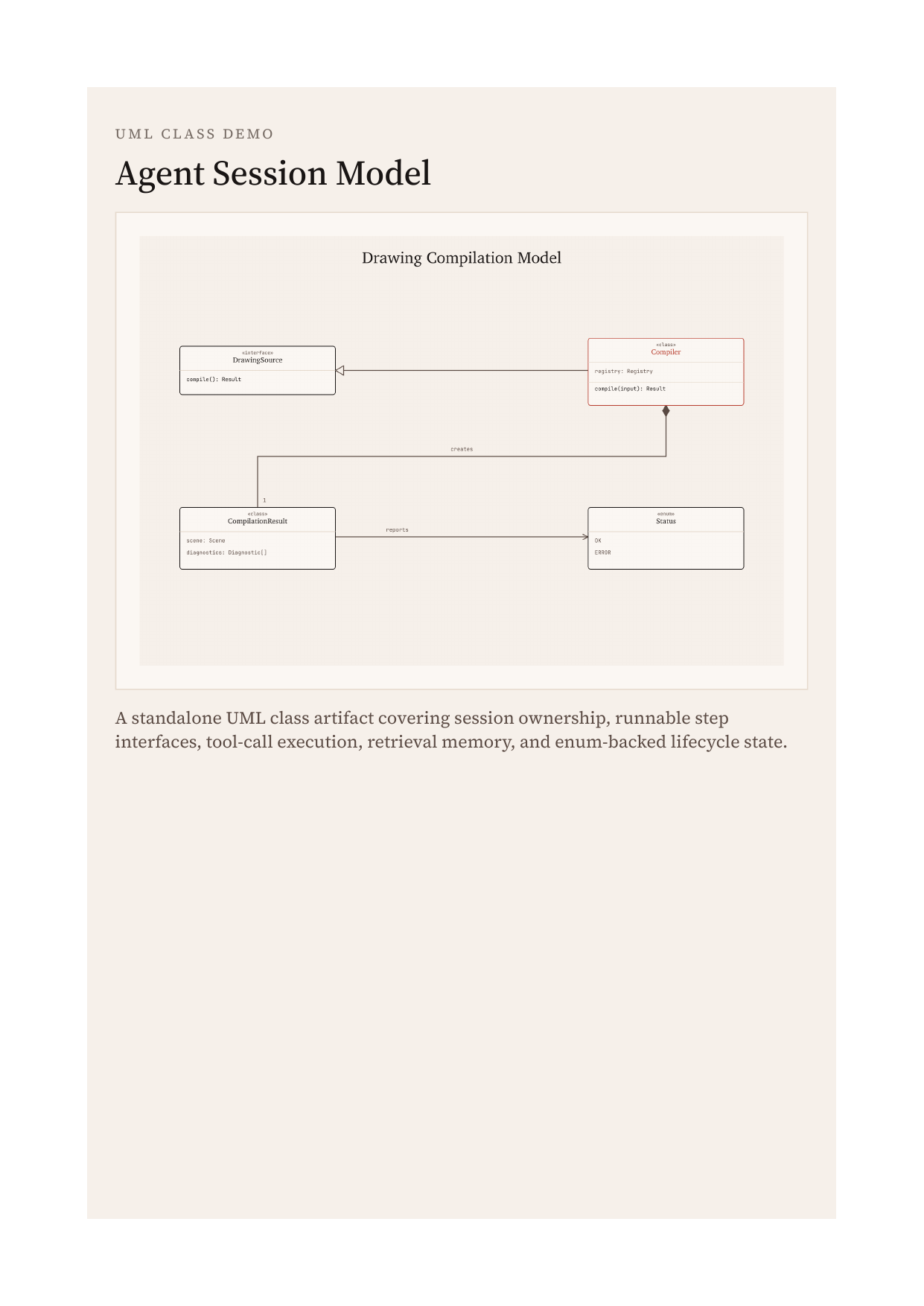
Twenty-three generator-backed diagram types cover architecture, process, notation, and data scenarios; four hand-drawn inline miniatures plus five rendered specimens stay visible here as parity references. Arrows, nodes, legends, grids, and labels share one Folio technical illustration stroke across generated artifacts and homepage miniatures.
System components and connections, one focal node
Decision branches, yes/no paths, focal on success
Quarterly revenue comparison, gradient or single color
Revenue structure breakdown, supports 3–6 segments
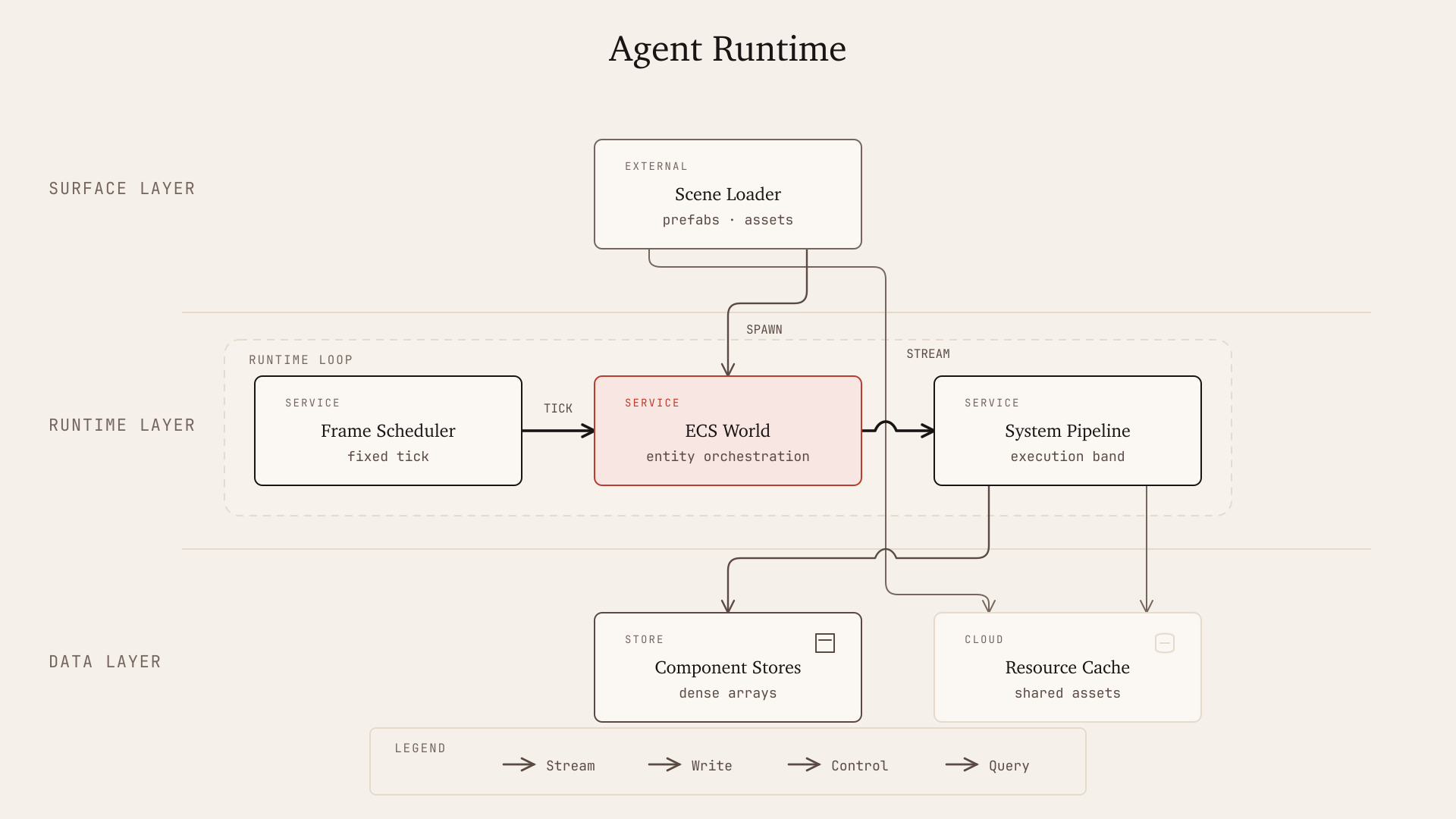
Request-driven runtime case for gateway ingress, planning, model execution, tool use, retrieval memory, and observability.
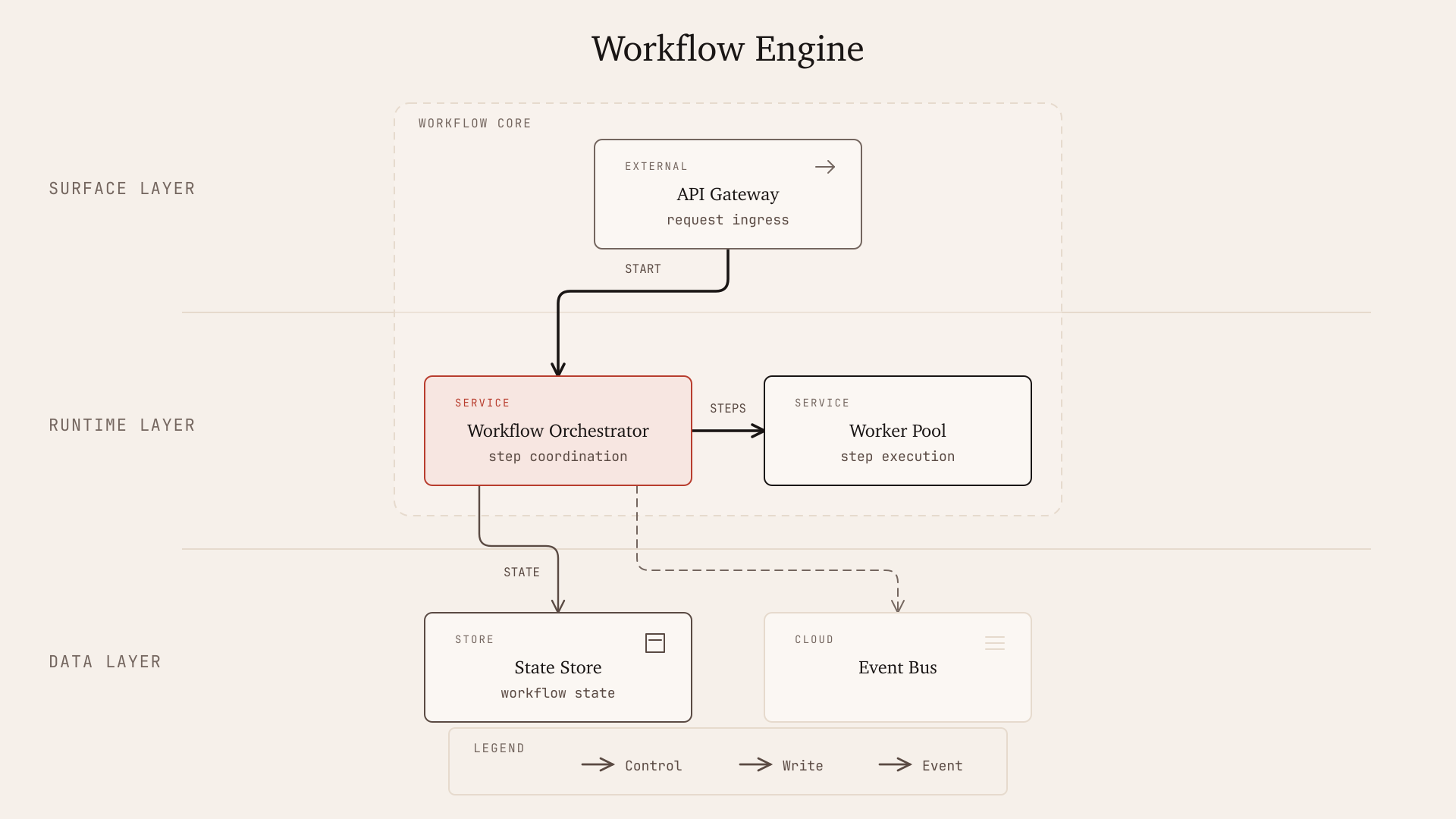
Workflow orchestration case for ingress, orchestration, worker execution, state persistence, and event-based continuation.
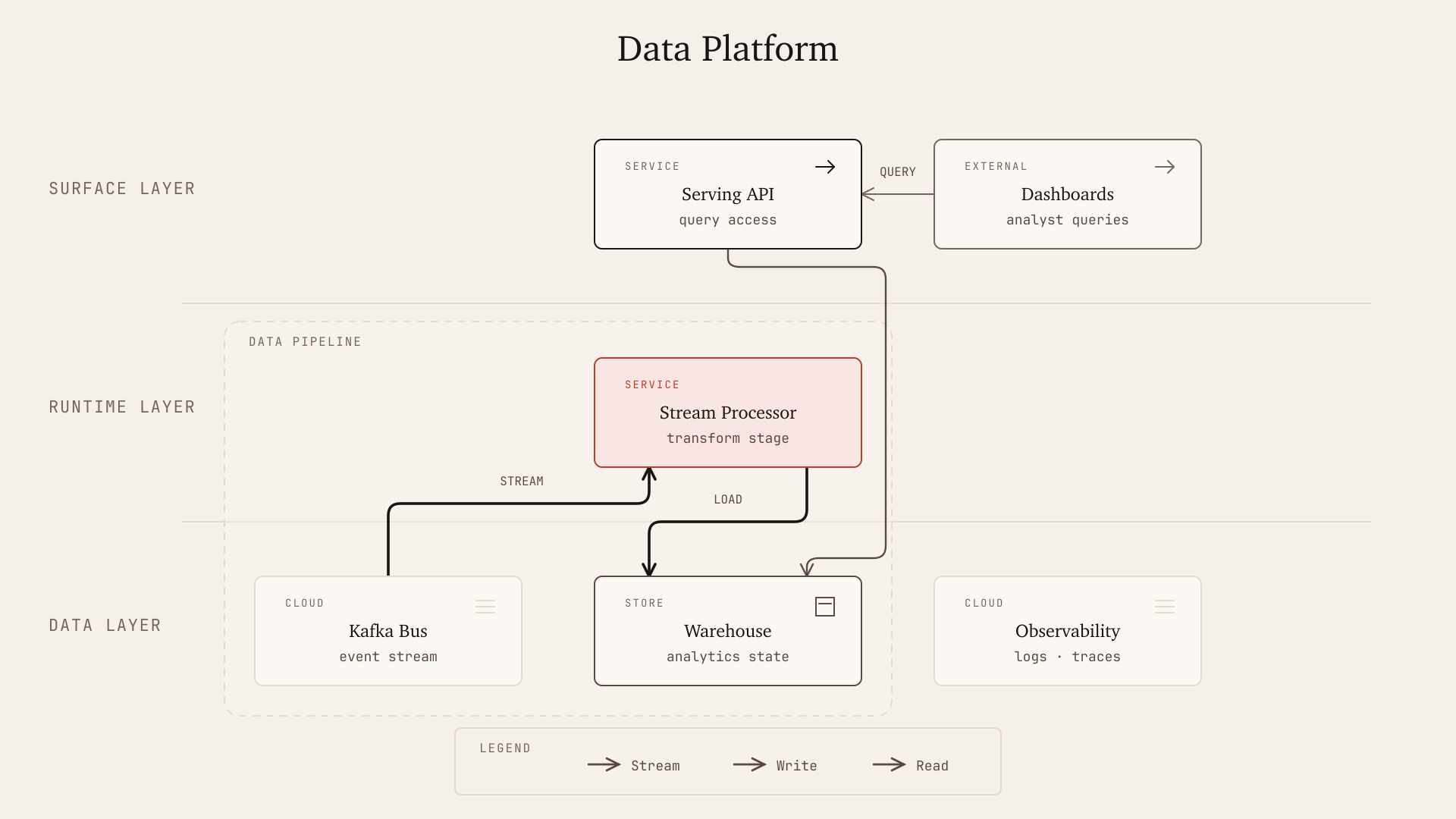
Policy-driven layout case for pipeline spine, warehouse serving, and supporting read paths rendered from one reusable grammar.
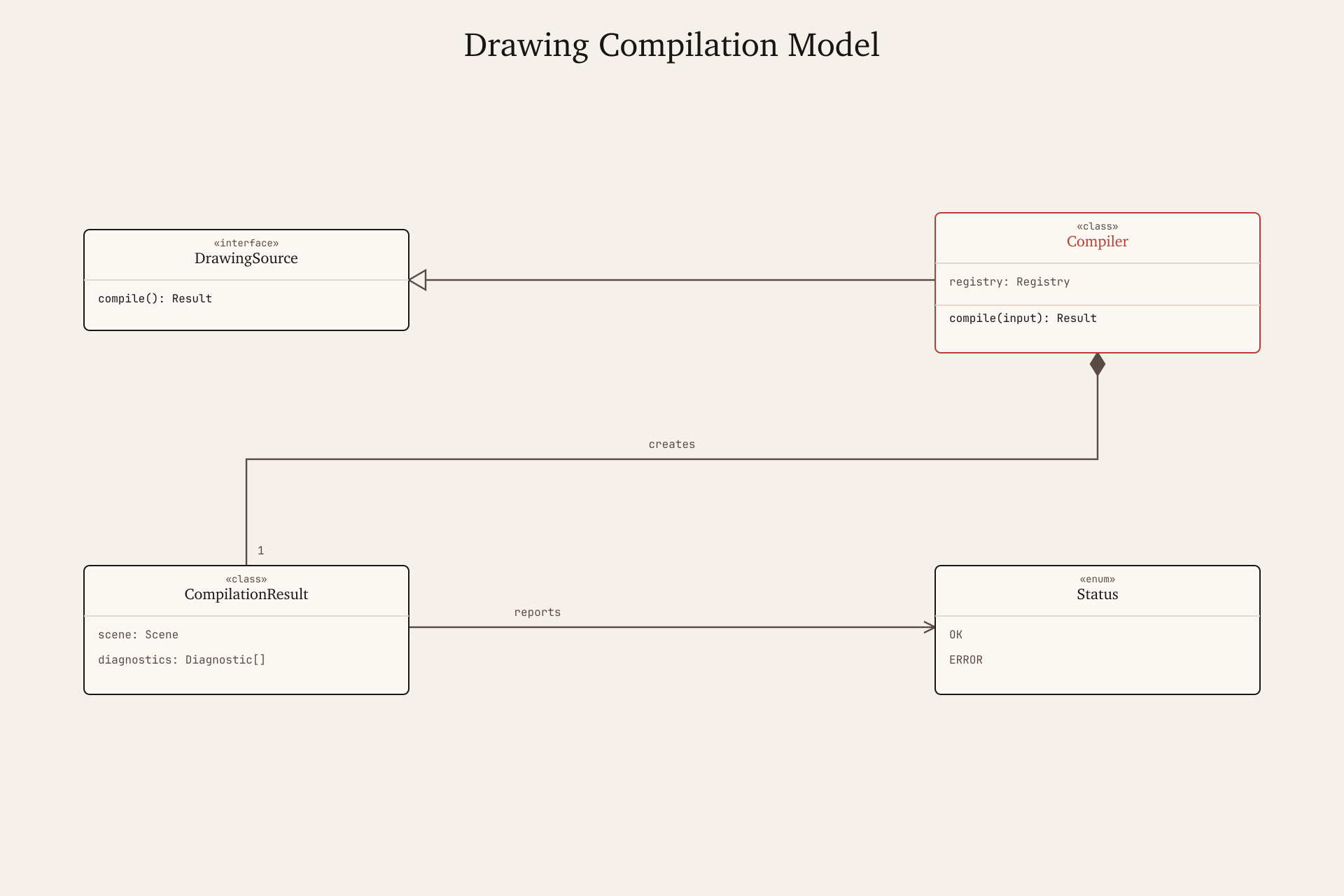
UML domain model case with interfaces, enum lifecycle state, composition, aggregation, and retrieval-memory associations.
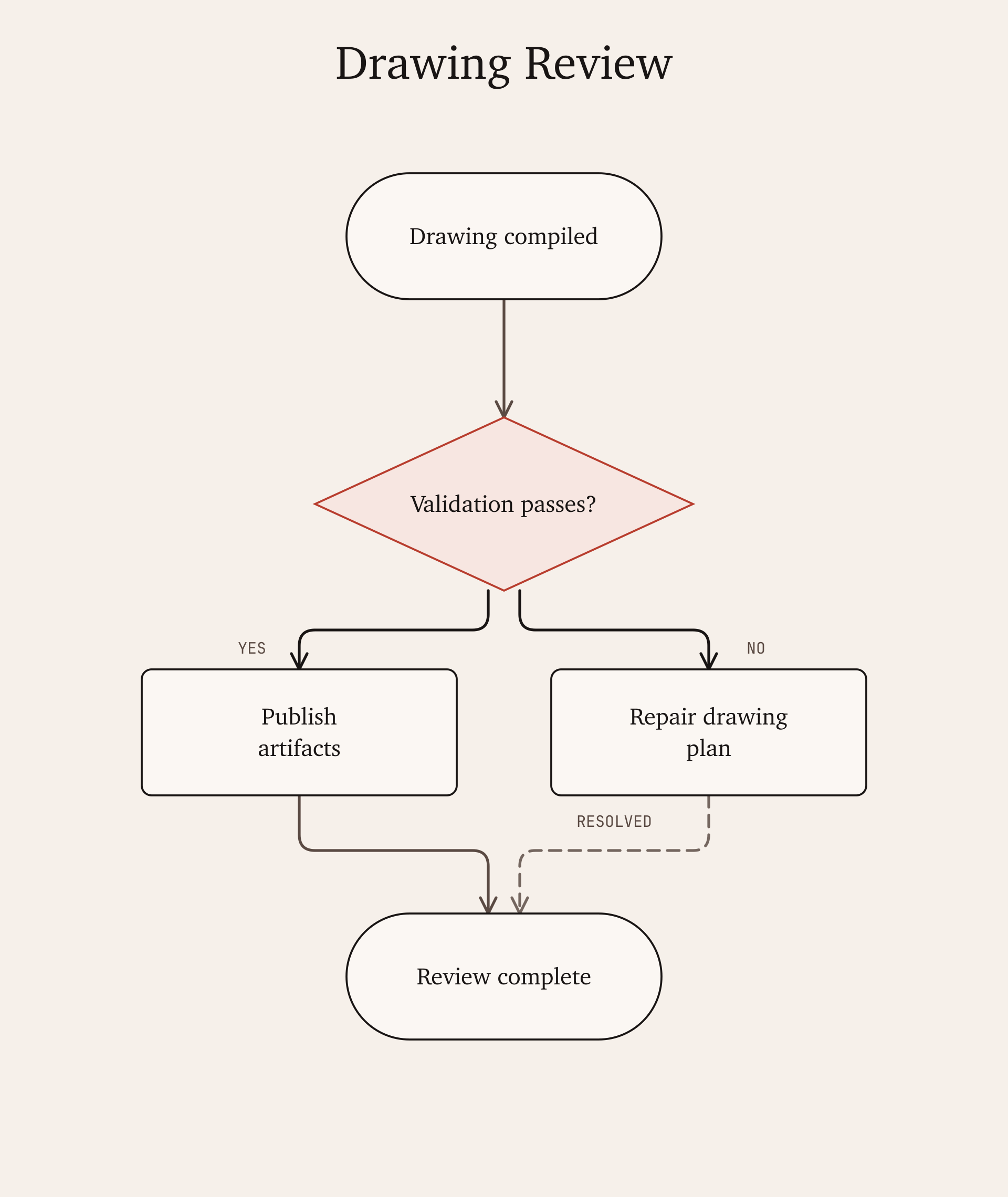
Drawing DSL case with typed decisions, labelled branches, orthogonal routing, and accessible SVG metadata.
08 · Web
A series index and its module archives, built as self-contained static HTML. Screen type, spacing, measure and figure geometry come from the Web profile; there is no component library, router or app shell.
Two Page Kinds
A case is content: it names the work it reads and never describes the engine that set it. A fixture is the engine's conformance page, with a delivery status and a package path.
| Part | What it carries | Owner | Rule set |
|---|---|---|---|
| Series index | Series title, lead, one card per module | build_web.py | W-DLV, W-STR |
| Module archive | Doc head, contents, chapters, plates, sources | build_web.py | W-CNT, W-FIG |
| Measured page | Computed type, column, plates, captions | web_verify.py | V-* |
Build
folio.py web --series <dir> writes the series; check_web.py --level 3 verifies structure, density, colour and figure geometry. The browser measurement runs nightly.
| Layer | Source | Rule | Limit |
|---|---|---|---|
| Type and measure | profiles/web/folio-v1.yaml | W-DEN, V-TYPE | No literal in base.css |
| Colour | profiles/theme/*.yaml | W-COL, V-COL-01 | No hex in a template |
| Figures | Drawing DSL | W-FIG, V-FIG | A page never hand-authors an SVG |
09 · Image Prompts
Folio also works as a visual brief for image models. These three examples translate the same parchment palette, cinnabar-coral restraint, and serif-led annotation logic into travel posters that still feel like designed documents.
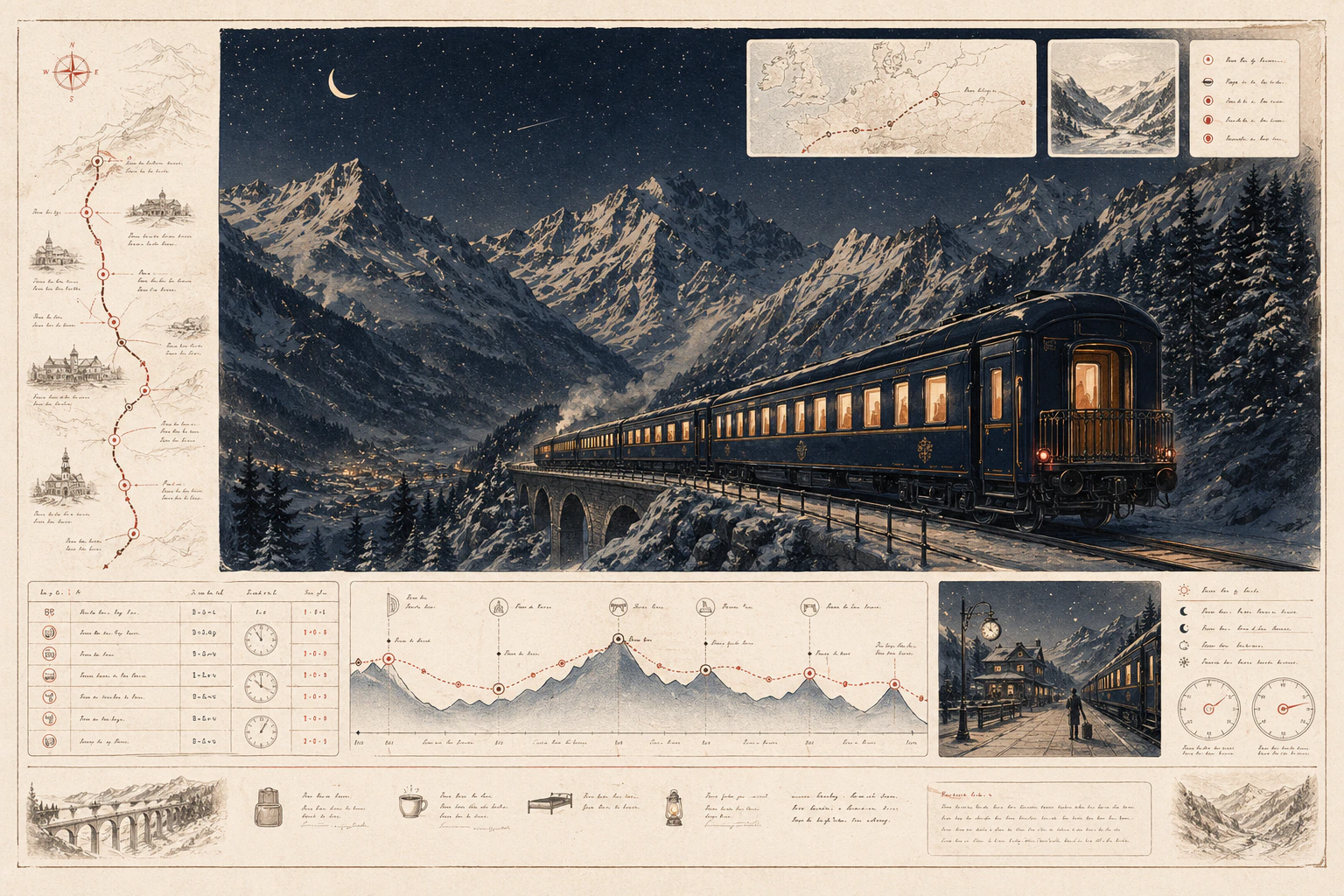
Alpine night-train travel atlas
Sleeper rail route, station callouts, timetable chips, and warm editorial notes.
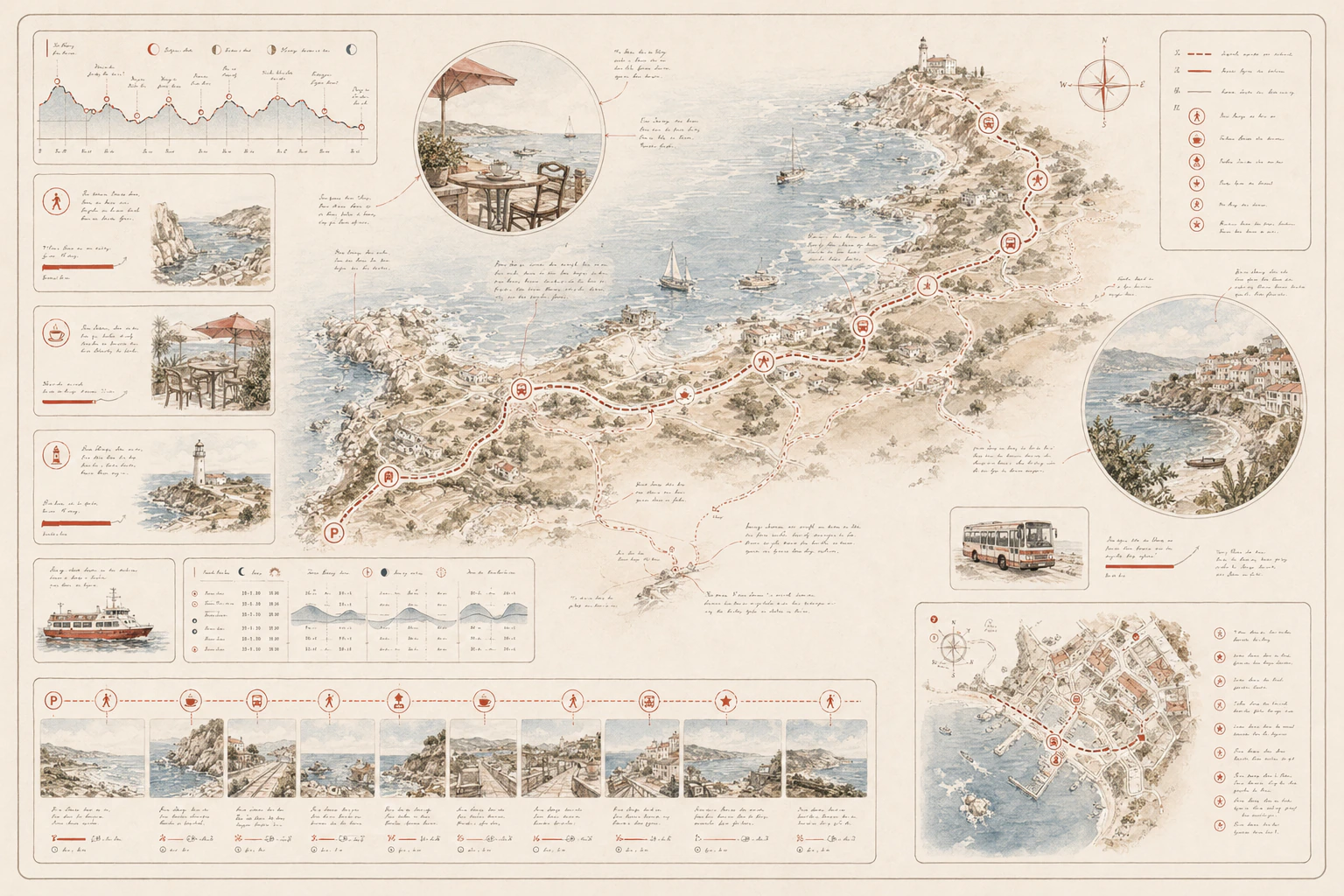
Coastal weekend route poster
Tide windows, cafe stops, walking segments, and route legends on one seaside spread.
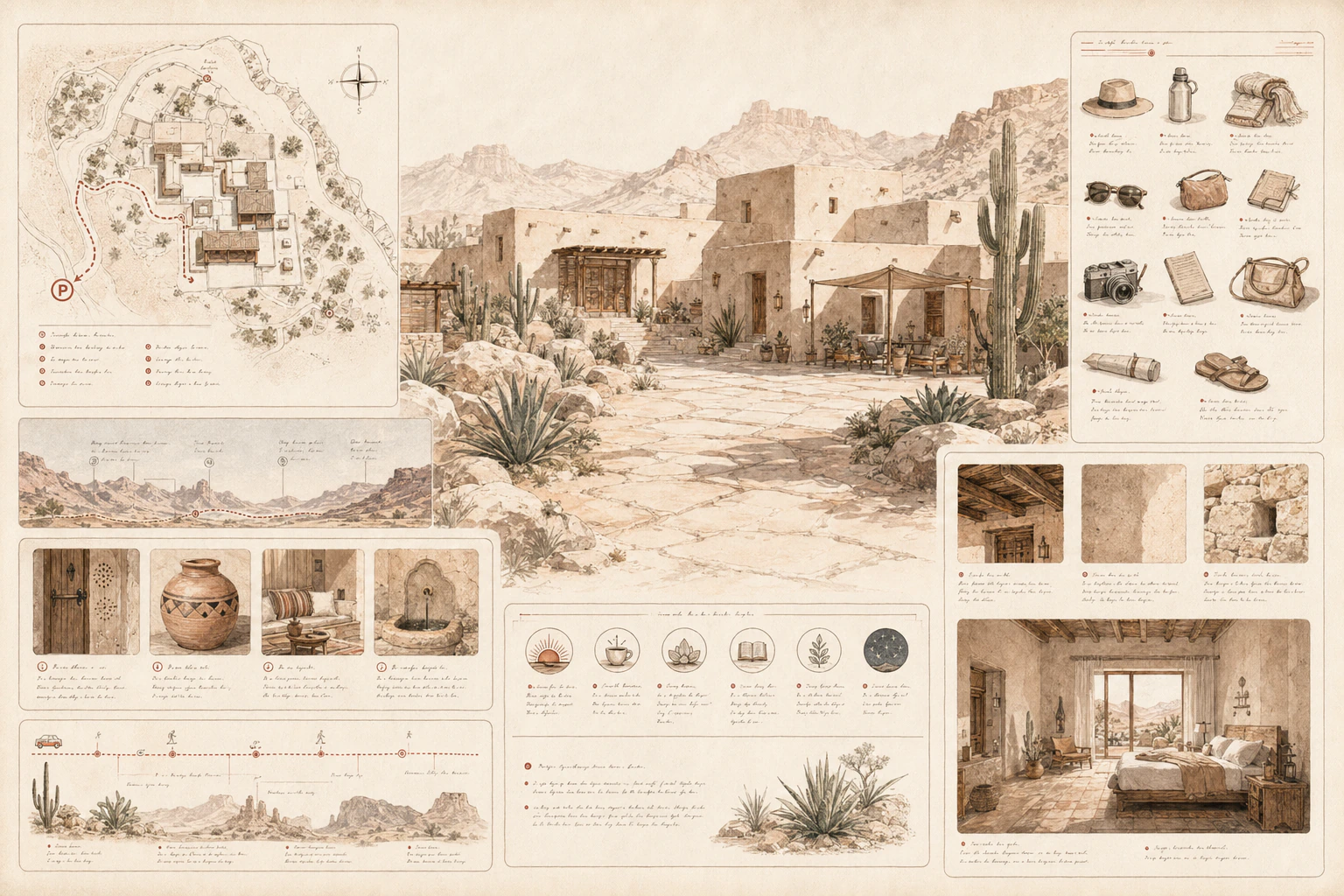
Desert design hotel field guide
Arrival map, packing cues, artifact close-ups, and a restrained hotel field journal layout.
10 · Decision Lookup
When in doubt about what to use, consult this table. If it's not here, go back to first principles.
| Task | How |
|---|---|
| Large headline | serif 500, size by hierarchy, line-height 1.10-1.30 |
| Reading body | serif 400, 9.5-10 pt, line-height 1.55 |
| Emphasize a number | color: var(--color-accent-brand), not bold |
| Separate two sections | 2.5pt brand left bar, or 0.5pt warm-gray dashed |
| Quote someone | Left 2pt brand solid + olive text |
| Show code | Ivory bg + 0.5pt border + 6pt radius + mono font |
| Primary vs secondary | Primary: brand fill + ivory text; Secondary: warm-sand + charcoal |
| Mark a special card | border: 0.5pt solid var(--color-accent-brand) or border-left: 3pt |
| Begin a section | Serif 500 · 15pt · size-led hierarchy, optional brand left bar when emphasis helps |
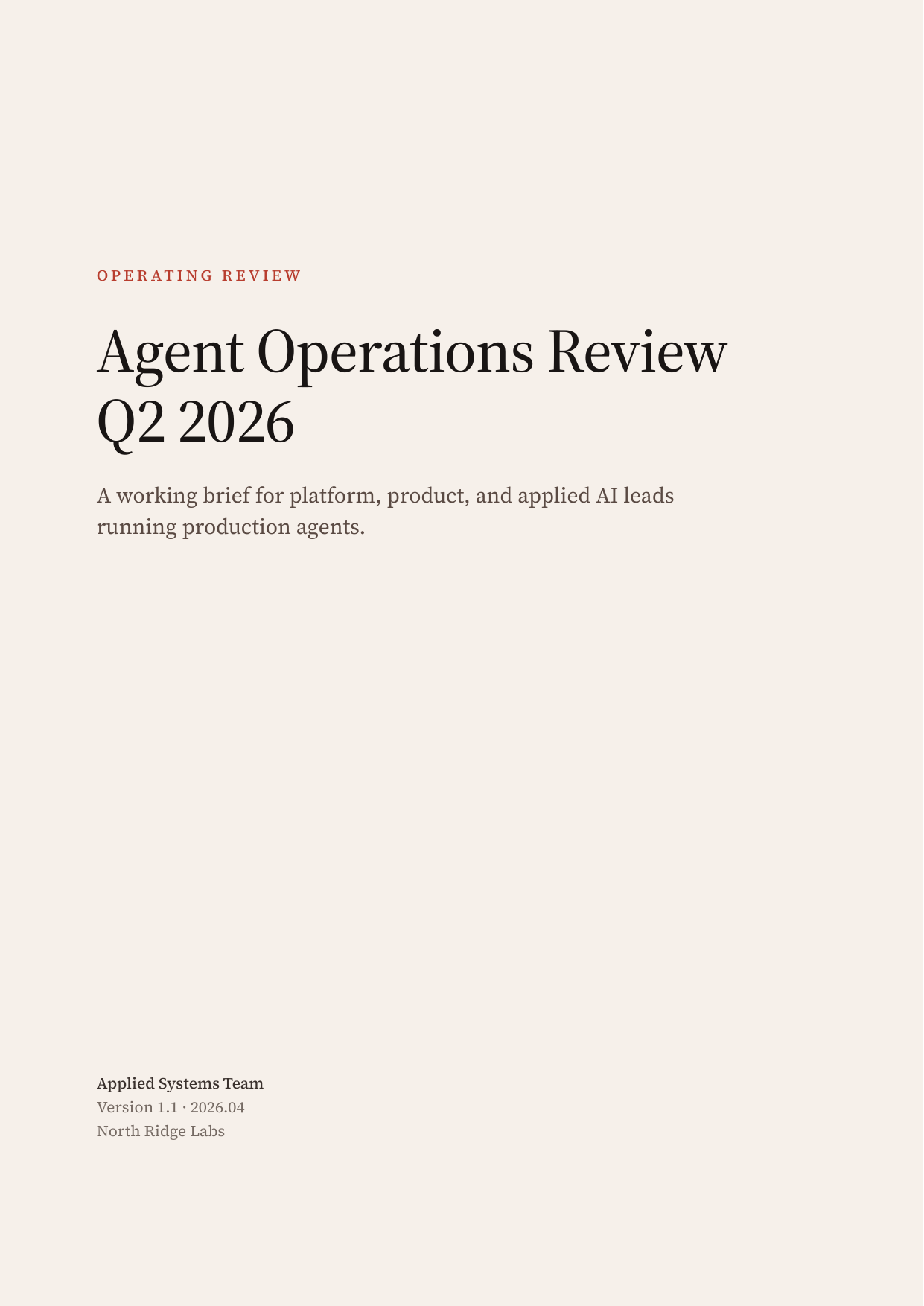
| Document cover | Single page, Display size + right-aligned author/date + generous whitespace |
| Data card | Ivory bg + 8pt radius + serif large number, cinnabar-coral + sans small label |
11 · Anti-Patterns
Exceptions are allowed, but the reason should be explicit.
Use #FFFFFF pure white or #f3f4f6 cool gray as page background. It makes the page feel brittle and weakens the warm parchment character.
Always use #F6F0EA parchment. Set @page background to the same color to avoid white edges when printing.
Use rgba(184,61,46,0.18) for tags. WeasyPrint renders padding and glyph areas at different opacity, creating double rectangles.
Use the tint lookup table for equivalent solid hex #F1D2CC. The rendering stays clean and the color remains stable.
Set headlines to font-weight: 600 or heavier synthetic bold. Synthetic bold blurs strokes and degrades typographic quality.
Body 400, headings 500 (real Medium weight). For more presence, use size or a brand left bar, never synthetic bold.
Use hard drop shadow 0 2px 8px rgba(0,0,0,0.3). Visually heavy and likely to print as dark blobs.
Ring shadow 0 0 0 1pt or whisper rgba 0.05, or simply alternate light and dark sections.